

I don’t know about anyone else, but my brain never really stops moving. In fact, I have to actively slow it down, which takes a mix of strategies and, some days, medication. At any given moment I have about 500 tabs open (in my head and, if I’m being honest, in my browser), and on Friday my brain gave me the dreaded blue screen of death, the one my laptop presents when I’ve asked too much of its memory.
I had ideas for a Substack, a weekend roundup of everything happening, but I just couldn’t do it. I’d promised myself and my family that I would go incommunicado all weekend, and it was glorious.
On Saturday we went to a local apple orchard for cider, apple cider donuts, and hot pretzels. I can’t put into words how amazing it was. As the day went on and the temperature dropped, we switched to hot cider, pulled a blanket out of my trunk, and got all snuggled up to watch the sunset. It was one of those moments I wish I could freeze-frame.

Sunday kicked off (literally) with my son’s soccer practice, where he scored two goals while we proudly watched from the sidelines. Ethan, my husband, used to coach soccer, and he could barely contain his pride. After that, we took a family excursion to Costco. Have you been to Costco lately? You can furnish your house, stock your fridge, get a hearing aid, and grab a hot dog and a soda for $1.50 on your way out. It’s unreal.
All this to say, it was a much-needed respite from the reality of the world, which was waiting for me the second I opened my laptop this morning, and tonight is the first chance I’ve had to come up for air. So, what happened while I was offline, and what does it mean for our families? Let’s discuss…
1. Pennsylvania’s measles outbreak passed 1,000 cases, the first in 35 years
Pennsylvania has now confirmed 1,004 measles cases this year, including 198 hospitalizations and five deaths, making it the first US outbreak to top 1,000 cases in 35 years. Many of us think this is a gross underestimate of the true number of cases in Pennsylvania. The most recent death was a 20-year-old woman with leukemia who wanted to be vaccinated but couldn’t because she was undergoing cancer treatment. (People like her are exactly who community immunity is meant to protect.)
Nationally, the US has had nearly 3,900 cases this year, its worst year since 1991, and eight measles-associated deaths in the past two years, more than the previous three decades combined. In November, international health officials will meet to decide whether the US has lost its measles elimination status.
There’s a hopeful number in here, too. Pennsylvania typically gives about 25,000 MMR doses a month, and more than 53,000 were given in September. If you’re not sure whether you’re protected (adults included), this piece provides some guidance. We also have an infographic coming that we hope will prove useful, so be sure to follow us on social media (Instagram, Facebook, LinkedIn, all the places)!
2. A child in Montana died from Hib, a disease most parents have never heard of
A Montana county health department shared that state health officials reported the death of an unvaccinated child from Haemophilus influenzae type b (Hib) in September, though we haven’t found a public announcement from the Montana Department of Public Health and Human Services itself yet. If you’re not sure what Hib is, you can thank vaccines for that. Before the vaccine, about 1 in 200 US children got a serious Hib infection by age 5, and it was the leading cause of bacterial meningitis in young kids. After the vaccine arrived in the late 1980s, cases fell by about 99%.
Pediatricians we talk with often name Hib as one of the vaccine-preventable diseases that scares them most, and cases in kids under 5 are ticking up (28 so far this year, compared with 21 in all of 2025). Meanwhile, Florida officials are holding a hearing this week on a proposal to drop Hib (along with hepatitis B, chickenpox, and pneumococcal vaccines) from school requirements. Dr. Paul Offit wrote about two unvaccinated children who ended up in Florida ICUs with Hib last year, including a 4-month-old who died, and why national counts likely miss cases.
3. Two little girls nearly died from raw milk, and pediatricians are calling for a ban
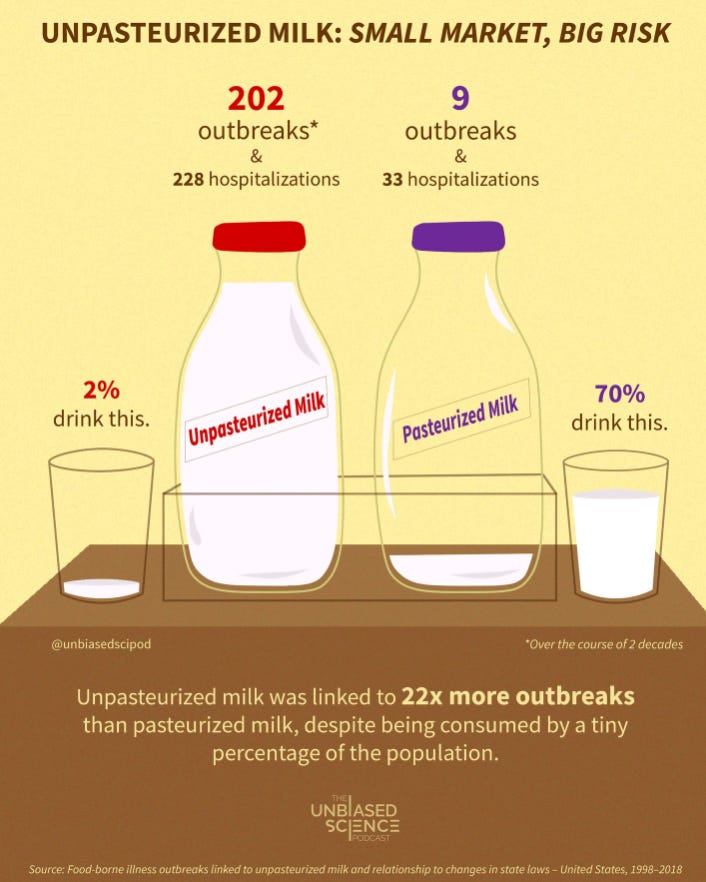
A new investigation from ProPublica told the story of a 17-month-old in California who went into cardiac arrest three times after drinking raw goat milk, and a 6-year-old who landed in the same hospital after drinking milk from the same farm. The American Academy of Pediatrics released a new policy statement calling raw dairy unsafe, with no proven health benefits, and urging a ban on its sale.
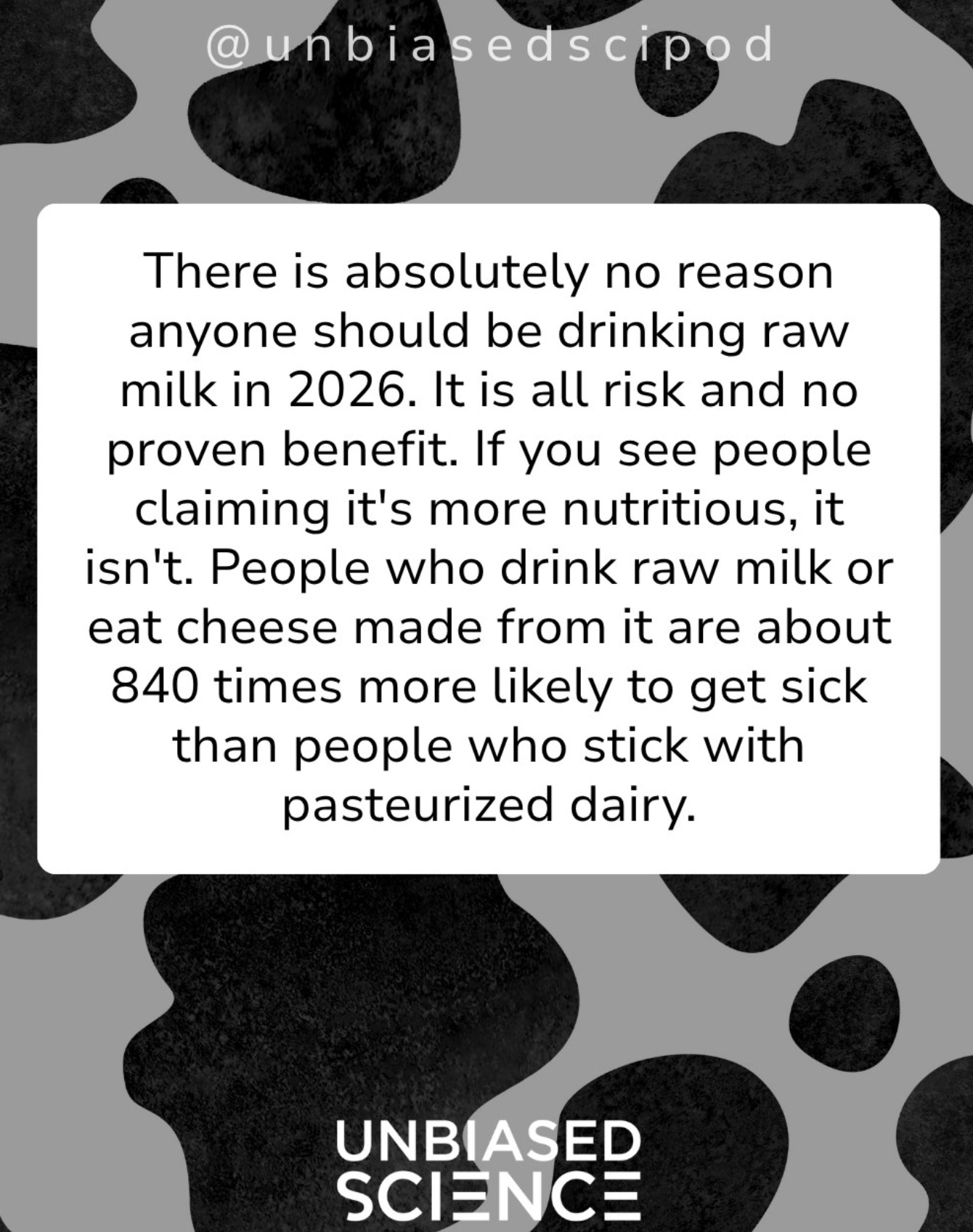
People who drink raw cow’s milk or eat cheese made from it are about 840 times more likely to get sick than people who stick with pasteurized dairy, according to a 2017 analysis of US dairy outbreaks. Pasteurized milk gives you essentially the same nutrition without the added infection risk. (We’ve tackled this topic many times. Two examples below, but be sure to search our database for more!)
4. Texas’s attorney general is investigating pediatricians for vaccinating children
Texas Attorney General Ken Paxton, who is also running for the US Senate, has accused pediatricians, insurers, and vaccine makers of a profit-driven conspiracy to push childhood vaccines, and he’s investigating the American Academy of Pediatrics, too. His office has demanded 10 years of vaccine purchase records from pediatric practices and asked them to keep the inquiry confidential. One small-town pediatrician has spent nearly $15,000 in legal fees responding, which meant digging up receipts for $18 vaccines and disclosing a $40 batch of cookies a vaccine rep once dropped off.
Pediatricians make for an odd target. They’re among the lowest-paid specialists in medicine, they field after-hours calls from worried parents and squeeze in sick visits on weekends, and this year they’re also caring for kids through the worst measles year since 1991. We looked at these claims in depth earlier this year in our white paper, The Real Economics of Pediatric Vaccination, and found the opposite of a profit scheme, with many practices losing money on vaccines, especially when caring for kids on Medicaid.
5. A lab worker in Russia died of suspected plague
A 28-year-old employee of an anti-plague research institute in Siberia died of a rapidly worsening pneumonia after reportedly breaking a tube containing the bacterium that causes plague. Russian officials now say she died of pneumonia of unknown cause, and their shifting statements raise real transparency questions. They also haven’t said which pathogens they tested for, so if it wasn’t plague, we still don’t know what caused her death, and public health experts are calling for answers. So far, no illness linked to her case has been reported among the nearly 200 people being monitored.
If it was plague, pneumonic plague generally spreads only through close, face-to-face contact with someone who’s sick, and it’s treatable with antibiotics, especially when caught early. When a man in Arizona died of pneumonic plague last year, 46 exposed people got preventive antibiotics, and none got sick. Dr. BK Titanji’s thread is excellent if you want to read more.
So, that’s where things stand. We have posts on Hib and the plague situation coming this week, so keep an eye on our social channels!
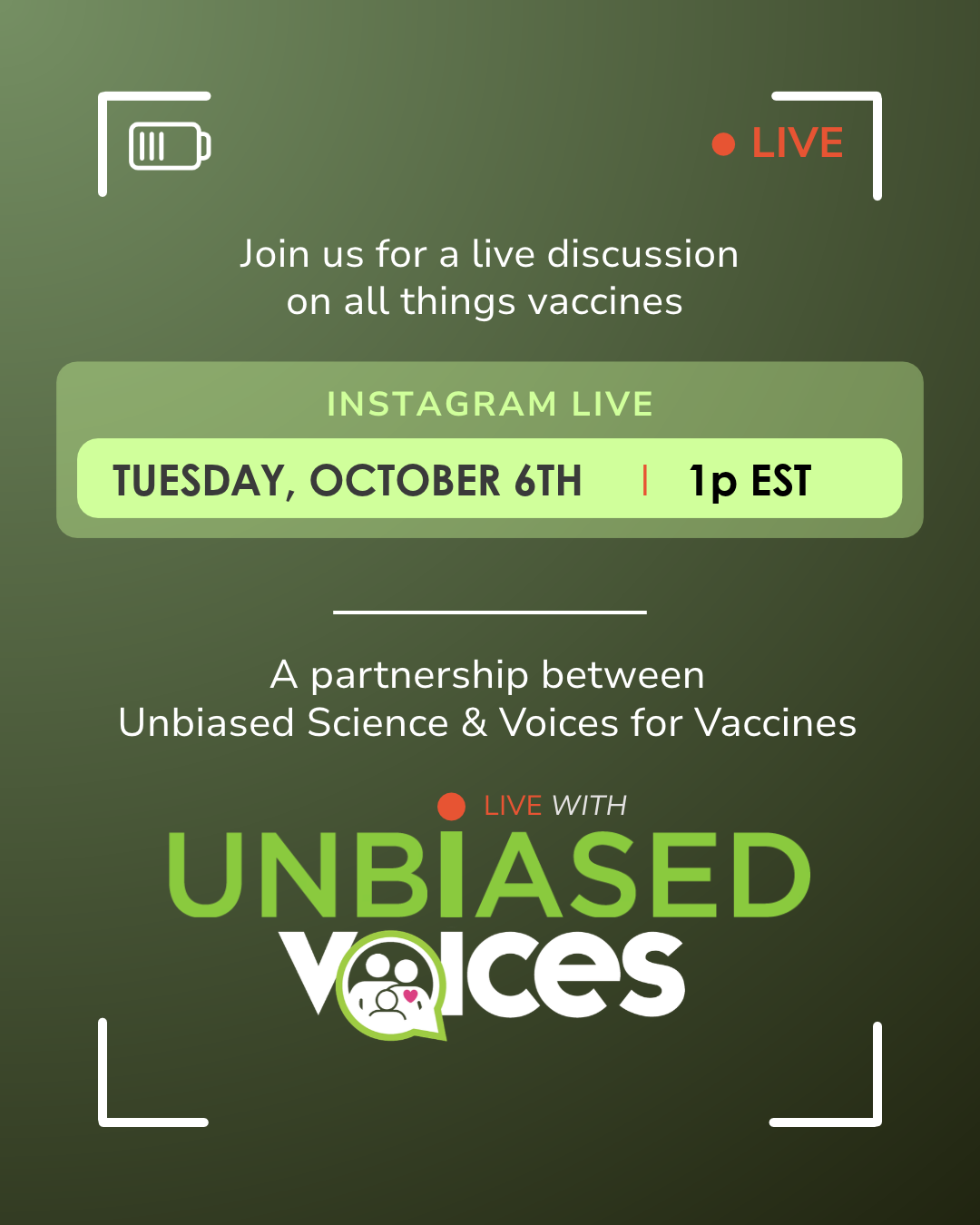
Tomorrow at 1 p.m. ET, we’re also kicking off a new live series with Voices for Vaccines. Karen Ernst, Dr. Jessica Reggi, Jen Bordenick, and I will talk all things vaccines and walk through current news articles together, and you can drop your questions for us to answer live. Join us on Instagram, Facebook, or YouTube!
As for me, I’m back with all 500 tabs open, and I’ll keep tracking each of these stories for you. I’m also going to try to protect a few more weekends like this one, because as today proved, the news will still be there on Monday…
Stay Curious,
Unbiased Science
Take care of yourself Dr. Jess. Yes you do important work but self care is important too. I speak from personal experience.
Excellent article thanks!