

I was a guest on a podcast recently, and the host asked me a question I get often in some form or another. If I had to pick the top five things people should do to stay healthy, what would they be?
My mind went straight to the usual place. Sleep, eat nutritious food, move your body, get vaccinated, and wear sunscreen. Then, in the same breath, I apologized for giving such a boring answer.
I’ve been thinking about that apology ever since. Why did I feel the need to apologize for giving people the advice that works? Somewhere along the way, we started expecting health advice to be novel, exciting, or a little bit secret, and the basics stopped feeling like enough. I think that says a lot about what we’ve allowed the word “wellness” to become, and about how many of us in science and medicine have learned to flinch at it. Let’s discuss…
Five foundational habits for staying healthy
For the record, here’s the list I gave, this time with no apology (though apparently I can’t give a spontaneous list without wanting to revise it afterward, so avoiding tobacco and keeping alcohol to a minimum belong right up there, too).
Sleep. Most adults need at least 7 hours a night, and sleep affects nearly everything from immune function to mood to heart health.
Eat nutritious food. Plenty of fruits, vegetables, whole grains, and variety, and nothing needs to be “clean” or free of “scary-sounding ingredients.” Food should be your main source of nutrients, though supplements make sense for a diagnosed deficiency, an absorption issue, a restricted diet (like B12 for vegans), or specific needs like folic acid before and during pregnancy.
Move your body. Regular activity (a brisk walk counts), along with some strength training, lowers your risk of heart disease, diabetes, and high blood pressure.
Stay up to date on recommended vaccines. They’re some of the most effective prevention tools we have, for kids and adults alike. Speaking of which, now’s the time to schedule your flu and COVID vaccines if you haven’t already.
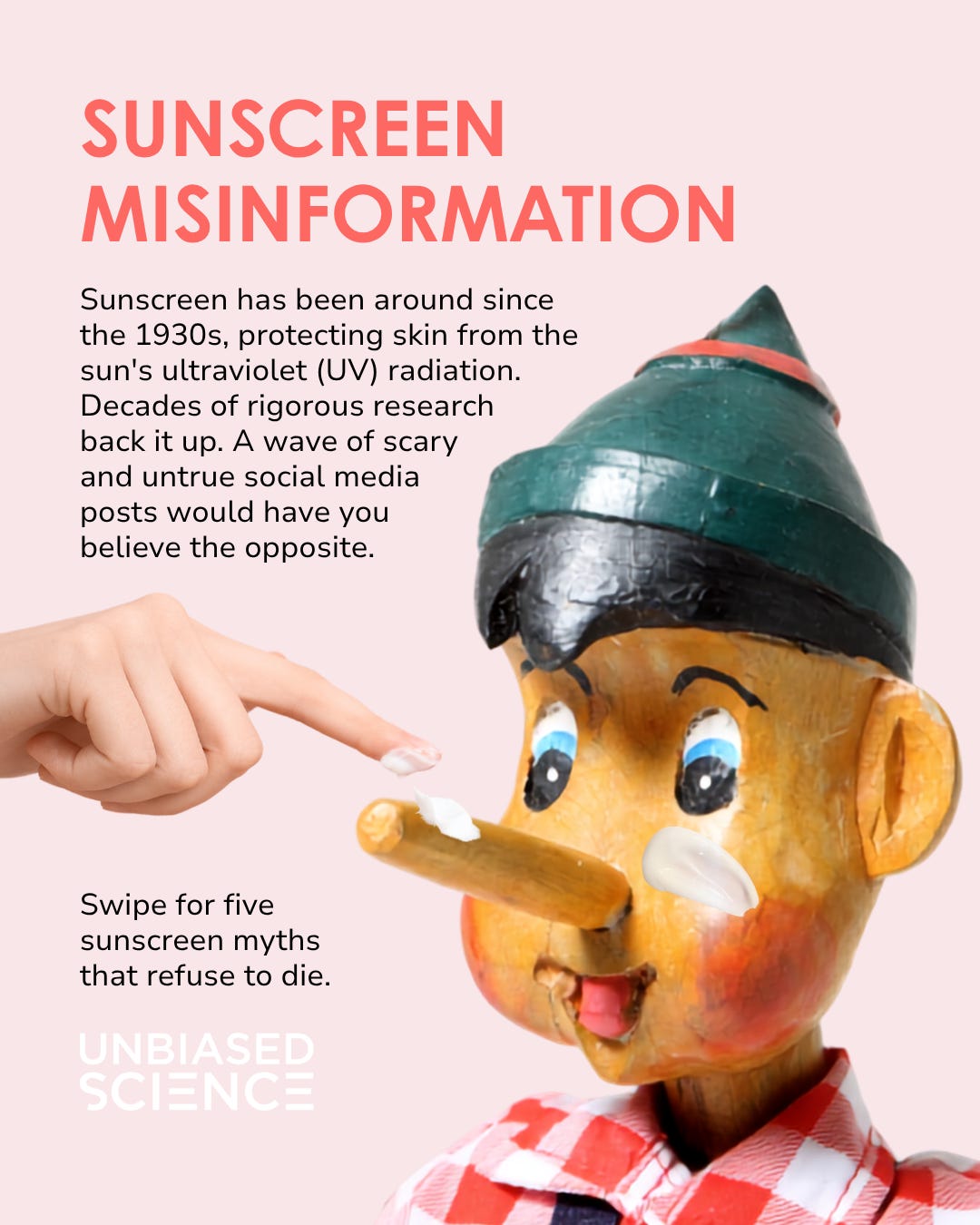
Wear sunscreen. Broad-spectrum SPF 30 or higher when you’re out in the sun, along with shade and protective clothing, lowers your risk of skin cancer. And no, it doesn’t matter whether you use chemical or mineral sunscreen. We just did a debunk roundup because the misinformation is staggering!
I’d also add spending time with people you care about. Social connection is tied to both mental and physical health, and some doctors around the globe now refer patients to community activities like dance classes and gardening groups, a practice called “social prescribing”.
Back to alcohol for a sec. The old idea that a glass of red wine a day protects your heart hasn’t held up well (did Big Grape come up with that?), and the World Health Organization (WHO) has stated that no level of drinking is safe for health, largely because of cancer risk. I won’t lie, I often unwind after a long week with a glass of red. Knowing a risk and choosing to accept some of it is part of real life, and that’s a very different decision from believing the wine is doing your heart a favor.
None of this is new, and most of it doesn’t require buying anything, though time, money, and where you live all shape how easy it is to do (more on that below).
Wellness wasn’t always a dirty word in science
The modern wellness movement has roots in public health. Halbert Dunn, a physician and biostatistician, popularized the term in a 1959 article in the American Journal of Public Health, distinguishing simple freedom from illness from what he called high-level wellness, meaning optimal functioning. His framework also treated people’s environment, including socioeconomic conditions, as part of how well they could be. Back in 1948, the WHO had already defined health as more than the absence of disease.
Wellness mixed sensible prevention with plenty of excess from the start, though. In researching the history of modern wellness, I learned about John Harvey Kellogg, who built his “Biologic Living” philosophy at the Battle Creek Sanitarium around sleep, exercise, and diet (which sounds a lot like my list), then wrapped it in moralizing, cure-all claims, and some horrifying “treatments.” His contemporary Bernarr Macfadden, whom some consider the 20th century’s first celebrity health influencer, was openly hostile to vaccines in the early 1900s. So, the anti-vaccine wellness influencer is more than a century old.
Why so many people turn to the wellness industry
If you’ve spent years trying to get someone to take your symptoms seriously, an influencer who claims to have the answer can feel like a lifeline. If you’re exhausted and stressed, a supplement or protocol promising to fix everything (and quickly!) is tempting. If the health care system has given you a rushed 15 minutes followed by a hefty bill, someone offering a personalized plan can feel like they’re providing something medicine hasn’t. Dr. Jen Gunter has made this point about women in particular, who are often dismissed by mainstream medicine and then find a warm, validating (and misleading) voice in the wellness world that finally listens. The wellness industry knows how to make people feel heard, but that isn’t the same as giving them good medical advice.
Clinical psychologist Jonathan Stea has pointed out that the 1910 Flexner Report, which pushed medicine to become more scientific, also left economically disadvantaged people with fewer options, and alternative medicine stepped in to offer listening and comfort. Scholar Colleen Derkatch argues in Why Wellness Sells (reviewed by Jonathan Jarry at McGill’s Office for Science and Society) that as institutions cut back on care, responsibility for staying healthy shifts onto individuals, who are then told to buy their way there.
It’s hard to optimize your sleep when you work nights, or to eat nutritious food when you’re struggling to afford groceries. The industry takes problems that are often structural, packages them as personal shortcomings, and then sells the fix.
Why so many of us in science roll our eyes at wellness
A single supplement might promise better sleep, sharper focus, a healthier gut, and slower aging, with little meaningful evidence behind any of it. Meanwhile, the interventions with decades of evidence behind them get treated as old news, partly because there’s only so much money to be made telling people to go for a walk.
Sleep is one of the clearest examples of something basic that the wellness industry has taken over. Melatonin and magnesium supplements are everywhere (especially on social media), but the evidence for each looks very different. Research on magnesium for sleep remains limited and inconsistent. Melatonin has better evidence for specific uses, like jet lag, delayed sleep timing, and trouble falling asleep in kids with ADHD or autism, though it isn’t recommended as a routine treatment for chronic insomnia in adults. In the U.S., melatonin is sold as a dietary supplement, which means it doesn’t need FDA approval before it reaches store shelves (in the UK and several other countries, it requires a prescription). That lighter oversight can lead to inaccurate labels: In a 2023 JAMA study of 25 melatonin gummy products, 22 contained amounts that differed from their labels by more than 10%, and one had more than three times the labeled dose.
For chronic insomnia, the first-line treatment is cognitive behavioral therapy for insomnia (CBT-I), a structured approach that targets the thoughts and behaviors keeping people awake. It goes well beyond familiar sleep hygiene advice about screens, caffeine, and late meals. Sleep hygiene alone isn’t an effective treatment for chronic insomnia, and there’s no miracle supplement required.
Part of me is annoyed because the word “wellness” was hijacked in a brilliant PR move (who doesn’t want to be well?). As Kitty Drake noted in the Guardian, nobody seems to agree on what the word means, and that slipperiness has been great for marketers. The Global Wellness Institute put the global wellness economy at $6.8 trillion in 2024 (a figure spanning 11 sectors, from beauty and healthy eating to fitness and wellness tourism).
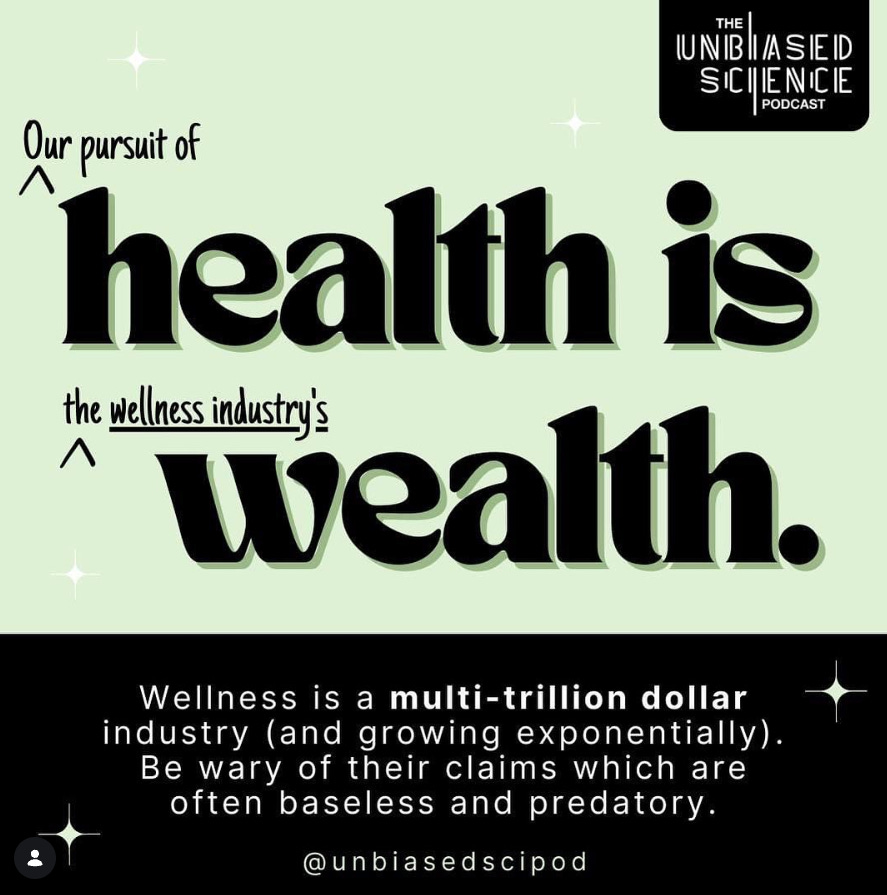
Those of us in science have contributed to the problem in our own way, too. We’ve seen “wellness” slapped on so many questionable products that the word itself triggers an eye roll (I’ve had that reaction myself). When we dismiss the whole concept, we risk dismissing what people actually want, which is to feel better, function better, and have some agency over their health. Those are reasonable goals, and we should be helping people pursue them with good evidence instead of leaving the conversation to whoever has the biggest marketing budget.
Why I’m going to stop apologizing for the boring answer
We keep coming back to the basics because they’ve been studied across decades, populations, and settings, and the evidence keeps pointing in the same direction. The details evolve (we’ve learned plenty about alcohol in the last decade alone), which is how science is supposed to work. A recommendation that has held up that long has earned its spot, and hearing it for the hundredth time doesn’t make it any less true.
Handing the word “wellness” over to people selling powders and peptides has been a mistake. Wanting to sleep better, feel better, and prevent disease is a perfectly reasonable goal, and the trouble starts when we’re told that reaching it requires an endless stream of products, elaborate protocols, and ever more expensive ways to improve on bodies that are already doing fine. Sleep, nutritious food, movement, vaccines, sunscreen, and social connection are wellness.
Knowing what works doesn’t mean everyone can easily do it, so part of our job is making the basics more accessible. Even then, none of this guarantees good health, because genetics, circumstances, and plain old luck play a role, too. Good health isn’t a reward for doing everything right (and poor health isn’t a punishment for getting something wrong).
When I apologized on that podcast, I was playing by the industry’s rules, where health advice has to feel new, exciting, or a little bit secret to be worth hearing. The next time someone asks me for my top five, I’ll give the same boring answer and leave off the apology.
A few other things we worked on this week
Measles is a grown-up problem, too. In a new CIDRAP op-ed, I wrote about how framing measles as a childhood disease leads adults to believe it isn’t a concern for them, even though 38% of confirmed US cases this year are in people 20 and older (and about 7 in 10 in Pennsylvania). The piece also covers how to figure out whether you’re protected, including what to do if you have no records or were vaccinated between 1963 and 1967.
What “died with” vs. “died of” measles really means. Dr. Elana Pearl Ben-Joseph and I wrote for STAT about the “with, not from” argument that has come back around Pennsylvania’s measles deaths. A death certificate records the chain of events that led to a death, and the underlying cause is whatever started that chain, so a child who develops fatal pneumonia because of measles died of measles.
My conversation with Dr. Sandro Galea. I spoke with Dr. Sandro Galea about his new book, Why Health?, and the Purple Public Health Project he co-created with Dr. Salma Abdalla. We talked about how the pandemic changed everything about the way people see public health and why the field has come to feel so partisan. We both hope to depolarize the field and build a public health for all, regardless of politics.
Stay Curious,
Unbiased Science
I know, for myself, I have frequently looked for the magic supplement or habit that would substitute for the basics because I was a single mom with three kids (and no child support) and worked constantly. I wanted to be healthy but I worked so much that the basics of taking care of myself seemed like one more thing to add to the already busting-at-the-seams schedule. My focus was my kids and my work. I’m 67 now (and still working full time due to no retirement savings) and can tell you that I have lived a life of illness because of that choice. I had intermittently tried to find time for myself but it always faded away with work changes or kids issues. If I could tell my younger self anything, it would be to demand the time needed for myself and just figure it out. It’s definitely a mindset change, one that’s not easy when you are focused on your kids. But now at this age I realize that if I had taken better care of MYSELF, my kids would be better today at taking care of themselves. So wellness can be generational.
Agreed 100%. Being fit (and high energy) for most people boils down to the basics. Simple, easy basics.
It is far too many times presented as this big goal which requires a personality transformation or endless discipline when it's not.